All posts by admin

Train Collision in Toledo Disrupts High-Speed Rail Services Between Madrid and Andalucia

Another train accident has occurred on the railway line between Madrid and Seville, involving an Alvia train and an Iryo train that collided in the town of Urda, in the province of Toledo. Unfortunately, two carriages fell down an embankment following a collision between an AVE train and an Iryo train in Urda, Toledo. Fatalities have not been ruled out.

The accident occurred near Urda station on the morning of Wednesday, 28 October, at around 8:50 a.m., prompting the deployment of a large emergency response operation.

High-speed rail services between Madrid and Andalusia have been suspended. The accident took place near Urda station, on the railway section close to Los Yébenes, and emergency services were called to the scene.

Firefighters and medical teams are working at the scene. The emergency response has included firefighters from the Alcázar de San Juan and Orgaz fire stations, as well as Civil Protection personnel from nearby municipalities. Three medical helicopters and two mobile intensive care units have also reportedly been dispatched.

Eyewitnesses have reported several deaths. Civil Protection reports that more than 46 people have died so far

Rail services between Madrid and Andalusia have been suspended. The disruption affects the high-speed railway line connecting Madrid with Andalusia.

The causes of the accident have not yet been determined. Adif has confirmed that the incident involved a rear-end collision between two trains, but this does not establish whether the accident was caused by a technical failure, a signalling problem or human error.

The immediate priority is to assist those affected, secure the accident site and assess the damage to the trains and railway infrastructure.

Official sources
Adif: Updates on the suspension of services on the Madrid–Andalusia high-speed line. Official Adif website.
112 Emergency Service of Castilla-La Mancha: Information on the emergency response. Official 112 portal.
Government of Castilla-La Mancha: Official regional government website.
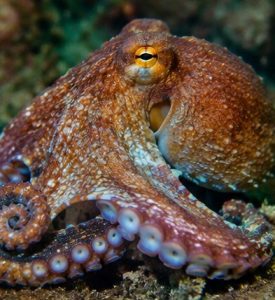
 

Seahorses and Octopuses: The Hidden Life Revealing the Biodiversity of the Vigo Estuary

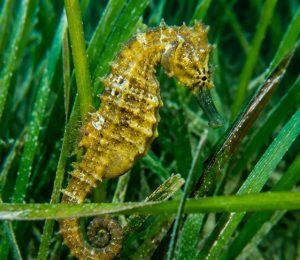
Beneath the surface of the Vigo estuary lies a wealth of biodiversity that still holds many mysteries. Seahorses are one example of this richness: their presence has sparked the interest of researchers seeking to learn more about their populations, movements, and the places where they find shelter. The goal goes beyond simply locating individual specimens; it is about discovering what conditions the ecosystem provides for them to survive and reproduce.

Among the key elements in their conservation are underwater meadows of Zostera marina. These plants create habitats that provide food and protection for various marine organisms. Their deterioration can have consequences for the species that depend on them, making it essential to understand their condition in order to assess the changes taking place in the estuary’s marine life. Conserving these seabeds is an issue that affects the entire ecosystem, not just one particular species.

Research into seahorses is also linked to the search for new shelters. In Vigo, the HIPPO-REF project, led by the Spanish National Research Council’s Institute of Marine Research (IIM-CSIC) and the Port Authority, aims to study the use of artificial structures as potential settlement sites. The initiative stems from the scientific interest generated by sightings recorded around the port and will make it possible to assess whether these shelters can contribute to the animals’ conservation. Their effectiveness will need to be verified by monitoring individual specimens and collecting data over time.

Common octopuses (Octopus vulgaris) offer another perspective on the marine richness of this environment. Researchers from the Institute of Marine Research in Vigo have tracked specimens around the Cíes Islands using acoustic telemetry, a technique that makes it possible to study their movements without relying exclusively on occasional underwater observations. The study showed that these animals typically leave their dens to forage and then return to them. Understanding their movements helps researchers learn how they use the seabed and which areas are important to their daily lives.

Research is not limited to adult octopuses. Other studies by IIM-CSIC have examined the early life stages of cephalopods found in the Vigo estuary, including small juvenile stages that are difficult to identify through conventional observation. Meanwhile, the Octosan project, developed in collaboration with the Government of Galicia, aims to deepen understanding of the life cycle and health of wild octopus populations, as well as examine the potential effects of environmental factors such as temperature and other changes in sea conditions. These studies may provide valuable information to improve our understanding and management of this fishery resource.

Seahorses and octopuses are different species, with distinct needs and behaviours, but studying them contributes to the same overarching goal: gaining a better understanding of Vigo’s marine ecosystems and the factors that influence their conservation. Ongoing research makes it possible to detect changes, identify important habitats, and make decisions based on a stronger scientific foundation. Ultimately, protecting the estuary’s biodiversity means looking beyond the animals we can see and paying attention to the seabeds and environmental conditions that make their presence possible.


October 26

Conxemar

6-8/10/2026 Conxemar

Dali-Dante

Hasta el día 15/11/2026

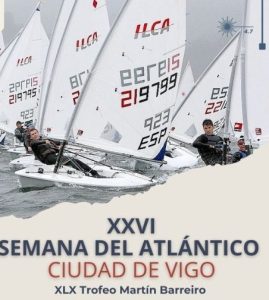
Trofeo Martín Barreiro


17/18/10/2026 Vigo

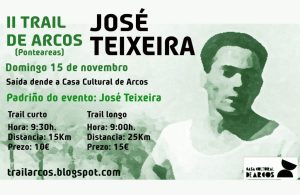
X Race Arcos–José Teixeira

 18 /10/2026. Ponteareas. Vigo

Vigo against Cancer

18/10/2026 Vigo

Eu Móvome pola Esclerose Múltiple

 25/10/2026 Vigo

Entre Pontes 10K

Domingo 25/10/2026. Gondomar. Pontevedra

International Conference: When Criminal Evidence Is Digital


22/10/2026  Aula 1 del edificio Redeiras. Vigo
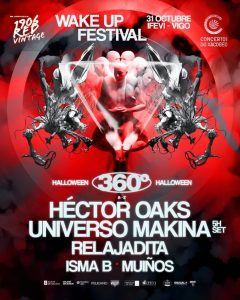
Wake up

30/10/2026, IFEVI, Vigo


The Ferris wheel in Vigo is 54 metres tall, approximately the height of an 18-storey building. It is decorated with thousands of LED lights and can carry around 200 people in its cabins.

The Ferris wheel, which is installed in Vigo every year during the Christmas season, is moving from the city centre to the Vialia car park.

In addition, the Cíes Market Christmas market will be located in the square outside the Vialia shopping centre, with its traditional food stalls.

Dante. Dalí

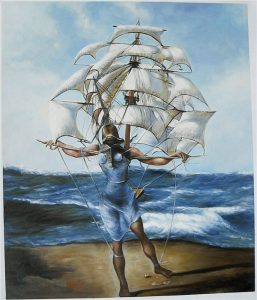
The exhibition “Dante. Dalí”, at the Museo do Mar de Galicia in Vigo, can be visited until November 15 at the Mar de Vigo Museum. The exhibition brings together nearly one hundred engravings created by Salvador Dalí to illustrate The Divine Comedy. The works show the artist’s unique style applied to Dante’s journey through Hell, which consists of 34 engravings, Purgatory with 33 engravings, and Paradise with another 33 engravings.

One of the most interesting aspects of the exhibition is seeing how Dalí transforms Dante’s words into images full of imagination and symbolism. Although both artists lived in very different periods, their works share the creation of fantastic worlds and reflections on topics such as sin, suffering and spirituality.

The visit allows visitors to discover a classic work from a different perspective and learn about a lesser-known side of Dalí as a surrealist painter. However, this exhibition allows visitors to discover his work as an illustrator.

In addition, the exhibition includes old editions of The Divine Comedy

Dante. Dalí

La exposición “Dante. Dalí”, en el Museo do Mar de Galicia, en Vigo, se podrá visitar hasta el 15 de noviembre en el museo Mar de Vigo. Dicha exposición reúne cerca de un centenar de grabados realizados por Salvador Dalí para ilustrar La Divina Comedia. Las obras muestran el particular estilo del artista aplicado al viaje de Dante por el Infierno que consta de 34 grabados, el Purgatorio con 33 grabados y el Paraíso con 33 grabados también.

Uno de los aspectos más interesantes de la exposición es comprobar cómo Dalí transforma las palabras de Dante en imágenes llenas de imaginación y simbolismo. Aunque ambos artistas vivieron en épocas muy diferentes, sus obras coinciden en la creación de mundos fantásticos y en la reflexión sobre temas como el pecado, el sufrimiento y la espiritualidad.

La visita permite acercarse a una obra clásica de una forma diferente y conocer una faceta menos habitual de Dalí de pintor surrealista. En cambio, en esta exposición se puede conocer su trabajo como ilustrado.

Además, la exposición incluye antiguas ediciones de La Divina Comedia.


Dante. Dalí

Dante. Dalí”, at the Museo do Mar de Galicia in Vigo, brings together nearly one hundred engravings created by Salvador Dalí to illustrate The Divine Comedy. The works show the artist’s unique style applied to Dante’s journey through Hell, Purgatory and Paradise.

One of the most interesting aspects of the exhibition is seeing how Dalí transforms Dante’s words into images full of imagination and symbolism. Although both artists lived in very different periods, their works share the creation of fantastic worlds and reflections on topics such as sin, suffering and spirituality.

The visit offers a different way of discovering a classic work and learning about a lesser-known side of Dalí. He is mainly known as a surrealist painter, especially for his paintings full of strange images, dreams and impossible elements. However, this exhibition allows visitors to discover his work as an illustrator.

In addition, the exhibition includes old editions of The Divine Comedy and a section dedicated to the Galician writer Darío Xohán Cabana

Castrelos becomes Vigo’s main summer stage for children with three family shows

Vigo is giving children a leading role this summer. The Castrelos Auditorium will not only host major concerts, but will also become a meeting point for families with three shows specially designed for younger audiences during July and August.

The children’s programme will begin on 6 July with “The Great Adventure of Little Chick Pepe”, a musical based on the popular children’s character. The show brings Pepe and his friends to the stage in a fun story full of songs, humour and audience participation, creating an experience designed for young children and their families.

The second family event will take place on 20 July with “The Emperor’s New Clothes”, a theatrical adaptation of the classic tale. The performance will introduce children to a world of imagination while highlighting values such as honesty, confidence and creativity.

The Castrelos children’s calendar will continue on 3 August with “Clown Tallarín: His Great Circus”, a musical family show inspired by the world of CantaJuego, featuring songs, dancing and colourful characters created especially for children.

Beyond these performances, Vigo’s summer programme also includes educational and creative activities for children, with workshops linked to art, culture, history and local heritage, offering families opportunities to learn and enjoy the city together.

With these events, Castrelos aims to become one of Vigo’s great family meeting points during the summer months. The combination of outdoor shows, culture and entertainment provides children with a chance to enjoy live performances in one of the city’s most emblematic locations.

This summer, Vigo is not only preparing a programme for adults and visitors, but also creating a space where children can discover music, theatre and imagination through unforgettable family experiences.

Vigo Arena: the 16,000-seat venue set to transform Teis and reshape Vigo’s future

Vigo is preparing one of the most ambitious urban projects of the coming decade: the construction of the Vigo Arena, a new multi-purpose venue designed to bring major international concerts, elite sports competitions and large-scale cultural events to the city.

With an expected capacity of between 15,000 and 16,000 spectators, the arena aims to fill a historic gap in Vigo: the lack of a modern venue capable of hosting the biggest shows and attracting international tours that currently choose larger cities.

The project will be located in Guixar, in the Teis district, as part of a wider urban transformation covering more than 62,000 square metres. The regeneration plan includes the construction of over 600 homes, around 60% of them protected housing, together with new public spaces, green areas and commercial zones.

The future arena will occupy a plot of approximately 10,000 square metres and is planned as one of the main landmarks of the new neighbourhood. Its design follows a contemporary architectural approach, adapting to the natural slope of the land and reducing the visual impact of the building.

The concept is based on a partially integrated structure, allowing the venue to blend into its surroundings while improving acoustic insulation. The upper area could become an accessible urban space with greenery and pedestrian routes, creating a connection between the building and the neighbourhood.

Inside, the arena will be designed for maximum flexibility, allowing rapid changes between sporting events, concerts and entertainment shows. The project includes multi-level seating and a possible underground car park with capacity for around 1,000 to 1,500 vehicles.

Construction is expected to begin around the end of 2028, once planning procedures, design work and public tendering are completed. Given the size and technical complexity of the project, the venue could potentially open around 2031 or 2032.

More than a sports hall, Vigo Arena represents a long-term vision for the city: combining architecture, culture, tourism and economic growth while turning Teis and Guixar into one of Vigo’s new urban centres.

Summer Cinema in the Gardens of Pazo Quiñones de León

As every year, the summer cinema in the gardens of Pazo Quiñones de León will return in a truly unique atmosphere, screening the following films:

  • 19 june— Buffalo Kids
  • June 20 — I Hate Summer
    June 26 — Father There Is Only One 4
  • 27 june — Rondallas
  • 3 july— Sonic 3

  • July 4 — Imaginary Friends