Category Archives: information

Today, February 7, there are two major railway sections cut off in Galicia that directly affect Vigo and the connection with Santiago. On one hand, the total suspension of all trains originating from or destined for Vigo (Vigo-Urzaiz and Vigo-Guixar) continues, meaning no passenger services are running to or from Santiago, Ourense, A Coruña, Madrid, or Portugal via Vigo.

Additionally, Renfe has extended the shutdown to the conventional line Ourense – O Carballiño – Santiago, where passenger trains have also been stopped due to risks of flooding and landslides. In practice, this leaves the following main routes without passenger traffic today:

Vigo – Santiago (southern section of the Atlantic Axis, both from Urzaiz and Guixar).

Vigo – Ourense (interior line along the Miño, including links to Madrid and Barcelona).

Vigo – Tui (and extension to Portugal via the Celta Train).

Ourense – O Carballiño – Santiago (conventional line, distinct from the high-speed one).

Renfe has stated there will be no widespread alternative road transport plan for these routes, though ticket changes and cancellations are allowed at no cost.

The trains were suspended due to adverse weather conditions caused by the Leonardo storm, bringing heavy rain, strong winds, and a high risk of flooding, landslides, and falling trees along the Atlantic axis.

The suspension is in effect today, February 7, and remains indefinite, with no fixed reopening date.
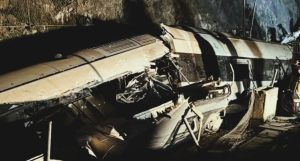
 

The Semaf train drivers union has called a general strike across the sector following the accidents in Adaluz two days ago and Gelida yesterday (in which a wall collapsed onto a train), which resulted in the deaths of the train drivers and other passengers, and left numerous others injured. In their statement, they declared:

"We consider this situation of constant deterioration of the railway unacceptable. Various measures must be urgently implemented on our network to guarantee the safety of professionals and passengers. The situation has exceeded the limits of what is tolerable, and this union will demand criminal accountability from those responsible for ensuring safety on the railway infrastructure."

Dates will be announced soon, as well as whether other sectors of the public will join the strike, as is already being requested on social media.

Works begin on the Porto viaduct and the VG-20 will face restrictions until the end of 2026.
The Ministry of Transport and Sustainable Mobility will begin structural reinforcement works on the Porto viaduct next Monday the 12th. The infrastructure is located on the VG-20, Vigo’s ring road. The project will bring significant changes to traffic flow which, according to the official schedule, will remain in place until the end of 2026.

The project was tendered and approved by the Ministry and published in the Official State Gazette on 21 November 2024. The announcement includes an investment of more than five million euros and a total execution period of 32 months, placing the full completion of the works beyond 2027, although the main traffic disruptions will be concentrated in 2026.

The works will take place on the Porto viaduct, located between kilometre points 9.6 and 10.1 of the VG-20, in the Bouzas area. The structure is more than 300 metres long and carries thousands of vehicles every day, which has led the Ministry to plan the intervention in phases in order to keep traffic operating for most of the time.

The first phase will begin in January 2026 with the closure of the left carriageway in the direction of Vigo. Traffic will be diverted to the opposite carriageway, which will operate temporarily with adapted two-way traffic. This reorganisation will remain in place for several months and will be the most noticeable change for drivers.

During the first months of work, structural reinforcement of the viaduct deck will be carried out, considered the most technically complex stage. Later, during the second half of 2026, the parapets and safety restraint systems will be replaced in order to bring the infrastructure into line with current safety regulations.

Although the total duration of the contract exceeds two and a half years, the Ministry expects the most severe traffic restrictions to remain in place for approximately eleven to twelve months, until the end of 2026. At that point, traffic should return to its usual layout, pending finishing works and other complementary actions with a lower impact.

The Ministry recommends that drivers exercise extra caution, comply with temporary signage and plan alternative routes. The project forms part of the national road maintenance programme and aims to ensure the safety, durability and proper condition of one of the most important road infrastructures in the Vigo area.


The City Council of Vigo has put out a tender for a contract aimed at the maintenance and repair of municipal roads, with a duration of four years.

The agreement, valued at 20 million euros, is scheduled to come into effect in 2026 and aims to continue providing the type of services that have already been offered in previous years, thus ensuring the upkeep of the city's streets and roads in the medium term.

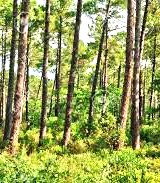
The Xunta de Galicia has opened the door to an innovative strategy for reforestation Galician forests, which includes the use of pine trees from other regions, such as France, as long as they meet quality and adaptability standards for the territory.

This approach is part of the Galicia Forest Plan 2021‑2040, which aims to strengthen forested areas and improve timber production without compromising sustainability. The main idea is to use seeds and seedlings of high genetic value, capable of growing faster, resisting diseases better, and adapting to climate changes.

Although Galicia has traditionally prioritized the use of local material, the Xunta believes that, in controlled cases, external species can be incorporated to achieve healthier and more productive forests. This measure is expected to reforest thousands of hectares and strengthen the Galician forestry industry, while maintaining ecological balance.

Ecologistas en Acción

Ecologistas en Acción will hold its Confederative Assembly from December 6 to 8 in Vigo, marking the first time in 25 years that it takes place in Galicia.

Program:

Friday, December 5 – 19:00h.
Public presentation of the book Paca Blanco, la Brava (the activist’s autobiography) — open to the public.

Saturday, December 6 – 11:30h.
Inaugural roundtable titled “Social Environmentalism as a Tool for Change” — open to the public, with representatives from Galician collectives.

Saturday, December 6 – Afternoon
Start of internal sessions: review of work done in 2025 and planning of campaigns and action lines for 2026 (exact time not publicly specified).

Sunday, December 7 – Morning
Confederative debates: budget approval, review of territorial milestones, review of statutes, presentation of new communication strategy.

Sunday, December 7 – Afternoon
Thematic workshops by areas and EEA groups; call for anti-nuclear action.

Sunday, December 7 – 16:30h.
Public screening of the documentary Dende que veu a mina — about the impacts of mining in Galicia.

Sunday, December 7 – Evening
Concert at Sala Rebullón (Tameiga space) with musical performances.

Monday, December 8 – Morning/Afternoon
Closing demonstration — a march highlighting various ecosocial struggles in Galicia (mining, industry, fishing, cruise tourism, international solidarity, etc.), ending with the reading of a manifesto on the beach.

Galicia Leads Spain in English Proficiency, Vigo Tops Cities

According to the latest EF English Proficiency Paper, Galicia is one of the top regions in Spain for English skills, consistently ranking in the “high proficiency” category. The region’s score this year is 563 points, placing it ahead of La Rioja (560), Madrid, Navarra (553), Asturias (552) and Cantabria (550).

Photo: Concello de Vigo

Among Spanish cities, Vigo stands out as the leader with 585 points, followed by Gijón (575) and Zaragoza (565), follow it Barcelona, Valencia and Madrid .

Experts attribute Galicia’s success to long-term educational policies promoting multilingualism, teacher training, and immersive English experiences. Exchange programs, conversation assistants, and bilingual initiatives have all contributed to creating an effective learning environment.

Highlighting these efforts is PILIVIGO, a fully funded English exchange program in the U.K. for eligible students registered in Vigo. The three-week program offers students immersive exposure to English in various British cities, strengthening language skills and cultural experience.


The mayor of Vigo, Abel Caballero, has been demanding for years that the city of Vigo should have its own Faculty of Medicine.

The Xunta de Galicia insists that there must be “a single public Faculty of Medicine” in Galicia, the one in Santiago de Compostela, determined that it should remain the only faculty, even though the city of Santiago is smaller than Vigo in area, population, and number of hospitals.

For now, the Regional Minister of Education says that the best option is to “pool resources” and not fragment medical training, reaching an agreement so that the final years, 4th and 5th, are taught both in Santiago and in Vigo and A Coruña. According to a 2015 agreement between the Xunta, the USC, and the other Galician universities, sixth-year medical students are already distributed across several hospitals in Galicia. Specifically, 100 places are assigned for 6th-year students in Vigo’s hospitals.

There is a preliminary agreement among the rectors of USC, UVigo, and UDC to create teaching units in Vigo and A Coruña. In these units, at least 50% of the teaching staff for the second cycle would come from the universities of Vigo and A Coruña.

However, Abel Caballero states that this agreement is not enough, and he hopes to achieve that the first three years of the degree are also taught in Vigo, due to the city’s population, hospitals, and the ongoing need for doctors, for whom positions are always available.

The mayor of Vigo, Abel Caballero, has been demanding for years that the city of Vigo should have its own Faculty of Medicine.

The Xunta de Galicia insists that there must be “a single faculty” of public Medicine in Galicia— the one in Santiago de Compostela— determined that it should remain the only faculty, even though the city of Santiago is smaller than Vigo in area, population, and number of hospitals.

For now, the Regional Minister of Education says that the best option is to “pool resources” and not fragment medical training, reaching an agreement so that the final years, 4th and 5th, are taught both in Santiago and in Vigo and A Coruña. According to a 2015 agreement between the Xunta, the USC, and the other Galician universities, sixth-year medical students are already distributed across several hospitals in Galicia. Specifically, 100 places are assigned for 6th-year students in Vigo’s hospitals.

There is a preliminary agreement among the rectors of USC, UVigo, and UDC to create teaching units in Vigo and A Coruña. In these units, at least 50% of the teaching staff for the second cycle would come from the universities of Vigo and A Coruña.

However, Abel Caballero states that this agreement is not enough, and he expects to achieve that the first three years of the degree are also taught in Vigo, due to the city’s population size, its hospitals, and the ongoing need for doctors, for whom there are always available positions.


El alcalde de Vigo, Abel Caballero, lleva años reclamando que la ciudad de Vigo tenga una facultad de Medicina.

La Xunta de Galicia insiste en que debe haber “una única facultad” de Medicina pública en Galicia, la de Santiago de Compostela, empeñados en que fuera la única facultad,  cuando la ciudad de Santiago es mas pequeña que Vigo en extensión, habitantes y hospitales.

De momento el conselleiro de Educación dice que lo mejor es “sumar recursos” y no fragmentar la formación médica llegando a un acuerdo para que se impartan los últimos cursos , 4ª y  5ª en   tanto en Santiago, como en Vigo y en Coruña. Según  convenio de 2015 entre la Xunta, la USC y las demás universidades gallegas, el alumnado de sexto de medicina ya se reparte por varios hospitales de Galicia.
En concreto, se asignan 100 plazas para estudiantes de 6.º en los hospitales de Vigo.

Hay un preacuerdo entre los rectores de la USC, la UVigo y la UDC para crear unidades docentes en Vigo y A Coruña. En estas unidades, al menos el 50 % del profesorado del segundo ciclo sería de las universidades de Vigo y A Coruña

Sin embargo manifestando Abel Caballero que este acuerdo no es suficiente y se espera conseguir que los tres primeros cursos se impartan en Vigo también debido al número de habitantes que hay, hospitales y la necesidad de médicos que existe y para los que siempre hay plazas.

Dinner and dance in Bouzas

 Centro marítimo de Bouzas. 31/10/2025Vigo

Nighttime maritime horror tour

19:00 horas . 31/10/2025, Vigo

Wake up Festival

31/10/2025. IFEVI.Vigo

Halloween party

 31/10/2025,Centro Comercial Camelias, Vigo

Actividades como karaoke, túnel del terror, desfile de disfraces, pinta caras, animación infantil

Samain party

Centro Travesía de Vigo de 17/30h. a 19/30h.  31/10/2025, Vigo

Family day in Nigrán

6 a 27 /10/2025, Nigrán, Pontevedra

Face painting!

Zona naútico. 18 a 1/11/2025, Vigo

Children’s Samain activities

Casa Verde de Salcedo organiza el evento Samaín 25 de octubre de 2025, desde las 17:30horas, 25/10/2025, Salcedas

More halloween news ...