Seahorses and Octopuses: The Hidden Life Revealing the Biodiversity of the Vigo Estuary
Beneath the surface of the Vigo estuary lies a wealth of biodiversity that still holds many mysteries. Seahorses are one example of this richness: their presence has sparked the interest of researchers seeking to learn more about their populations, movements, and the places where they find shelter. The goal goes beyond simply locating individual specimens; it is about discovering what conditions the ecosystem provides for them to survive and reproduce.
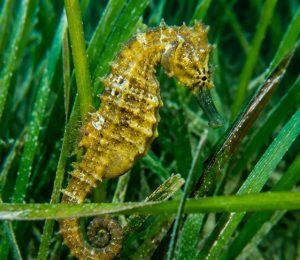
Among the key elements in their conservation are underwater meadows of Zostera marina. These plants create habitats that provide food and protection for various marine organisms. Their deterioration can have consequences for the species that depend on them, making it essential to understand their condition in order to assess the changes taking place in the estuary’s marine life. Conserving these seabeds is an issue that affects the entire ecosystem, not just one particular species.
Research into seahorses is also linked to the search for new shelters. In Vigo, the HIPPO-REF project, led by the Spanish National Research Council’s Institute of Marine Research (IIM-CSIC) and the Port Authority, aims to study the use of artificial structures as potential settlement sites. The initiative stems from the scientific interest generated by sightings recorded around the port and will make it possible to assess whether these shelters can contribute to the animals’ conservation. Their effectiveness will need to be verified by monitoring individual specimens and collecting data over time.
Common octopuses (Octopus vulgaris) offer another perspective on the marine richness of this environment. Researchers from the Institute of Marine Research in Vigo have tracked specimens around the Cíes Islands using acoustic telemetry, a technique that makes it possible to study their movements without relying exclusively on occasional underwater observations. The study showed that these animals typically leave their dens to forage and then return to them. Understanding their movements helps researchers learn how they use the seabed and which areas are important to their daily lives.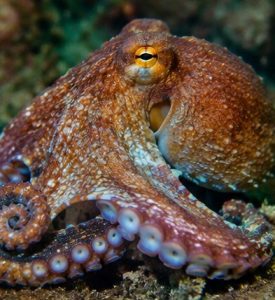
Research is not limited to adult octopuses. Other studies by IIM-CSIC have examined the early life stages of cephalopods found in the Vigo estuary, including small juvenile stages that are difficult to identify through conventional observation. Meanwhile, the Octosan project, developed in collaboration with the Government of Galicia, aims to deepen understanding of the life cycle and health of wild octopus populations, as well as examine the potential effects of environmental factors such as temperature and other changes in sea conditions. These studies may provide valuable information to improve our understanding and management of this fishery resource.
Seahorses and octopuses are different species, with distinct needs and behaviours, but studying them contributes to the same overarching goal: gaining a better understanding of Vigo’s marine ecosystems and the factors that influence their conservation. Ongoing research makes it possible to detect changes, identify important habitats, and make decisions based on a stronger scientific foundation. Ultimately, protecting the estuary’s biodiversity means looking beyond the animals we can see and paying attention to the seabeds and environmental conditions that make their presence possible.
 -
 -
 -
 -
 -
 -